Red River Gorge Map PDF: A Comprehensive Guide (Updated January 27, 2026)
Navigating the stunning Red River Gorge requires reliable maps; this guide details accessing and utilizing PDF maps for a safe and enriching experience within the forest․
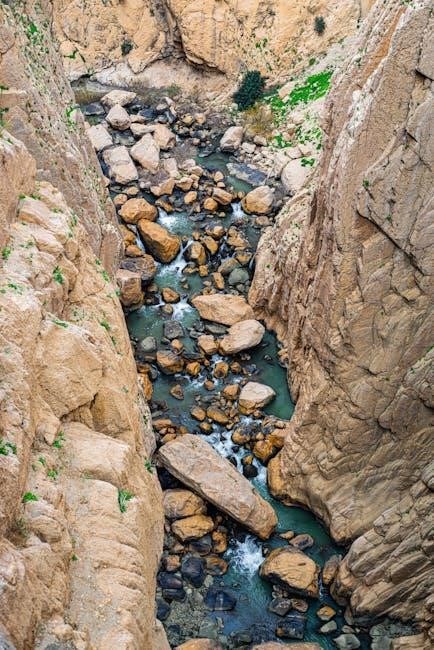
The Red River Gorge, nestled within Kentucky’s Daniel Boone National Forest, is a breathtaking canyon system renowned for its unique sandstone cliffs, natural arches, and diverse ecosystems․ This geological wonder attracts hikers, climbers, and nature enthusiasts from across the globe, offering a truly immersive outdoor experience․
However, the Gorge’s rugged terrain and extensive trail network necessitate careful planning and reliable navigation․ Getting lost is a genuine concern, especially given the limited cell service in many areas․ A detailed map, particularly in PDF format for offline access, becomes an indispensable tool for exploration, ensuring both safety and the ability to fully appreciate the Gorge’s beauty․
Why a Map is Essential for Exploring the Gorge
Exploring the Red River Gorge without a map is akin to navigating a labyrinth blindfolded․ The area’s intricate trail system, often unmarked or poorly maintained, can quickly lead to disorientation․ Reliable PDF maps provide crucial information about trail lengths, elevation changes, and potential hazards․
Furthermore, cell service is notoriously spotty within the Gorge, rendering digital maps reliant on a connection useless in many locations․ A downloaded PDF map ensures continuous access to navigational data, regardless of connectivity․ Prioritizing map usage isn’t just about convenience; it’s a fundamental safety precaution for a rewarding adventure․
Types of Red River Gorge Maps Available
Various map types cater to different needs, including topographic, trail-specific, geological surveys, and convenient digital PDF options for exploration planning․
Topographic Maps
Topographic maps are essential for understanding the Red River Gorge’s complex terrain․ These maps illustrate elevation changes using contour lines, providing a detailed three-dimensional representation of the landscape․ PDF versions allow for easy download and printing, though ensuring clarity is vital․
They showcase not only the height of land but also features like cliffs, ridges, and valleys, crucial for planning hikes and assessing difficulty․ Understanding contour intervals is key to interpreting these maps effectively․ These maps are often available through the Daniel Boone National Forest service and are invaluable for serious backcountry navigation, offering a comprehensive view beyond simple trail routes․
Trail Maps
Trail maps specifically focus on the extensive network of hiking paths within the Red River Gorge․ PDF trail maps highlight routes, distances, and often indicate difficulty levels, making trip planning simpler․ These are readily available from resources like AllTrails and REI, offering varying levels of detail․
They typically showcase trail junctions, landmarks, and points of interest along the way․ While less focused on elevation than topographic maps, they are ideal for quick reference during a hike․ Look for maps indicating blaze colors and trail markings for easier navigation, ensuring a safer and more enjoyable experience within the Gorge’s wilderness․
Geological Maps
Geological maps of the Red River Gorge reveal the fascinating rock formations and underlying structure of the area․ PDF versions showcase the different rock layers, fault lines, and geological features that contribute to the Gorge’s unique landscape․ These maps are invaluable for understanding the area’s history and formation․
While not essential for basic hiking, they enhance appreciation for the environment․ They often detail sandstone cliffs, arches, and caves․ These maps are typically found on the Daniel Boone National Forest website or through specialized geological surveys, providing a deeper insight into the Gorge’s natural wonders․
Digital Maps & Apps
Digital maps and apps offer a dynamic alternative to traditional PDF maps for Red River Gorge exploration․ Platforms like AllTrails, Gaia GPS, and Avenza Maps provide interactive maps with GPS functionality, allowing real-time location tracking․ Many allow downloading maps for offline access, crucial given limited cell service․
These apps often include user-submitted trail conditions, photos, and reviews․ While PDF maps offer a static overview, digital options provide layers of information and navigational tools․ Consider using both – a PDF for planning and a digital app for on-trail guidance․
Finding Red River Gorge Map PDFs Online
Numerous online resources offer downloadable Red River Gorge PDF maps, including official forest service websites, outdoor retailers, and dedicated hiking platforms for easy access․
Daniel Boone National Forest Website
The Daniel Boone National Forest’s official website serves as a primary source for Red River Gorge PDF maps and related navigational resources․ Visitors can typically find detailed topographic maps, trail maps highlighting popular routes, and informational guides outlining park features․
These maps, often available for free download, are regularly updated to reflect trail changes, closures, and potential hazards․ It’s crucial to check the website frequently before your visit to ensure you have the most current information․ Beyond maps, the site provides details on permits, camping regulations, and safety guidelines essential for a responsible and enjoyable experience within the Gorge․ Always prioritize official sources for accuracy․
AllTrails & Similar Platforms
AllTrails and comparable platforms – like Gaia GPS and Hiking Project – offer a wealth of user-generated Red River Gorge PDF maps and trail information․ These resources frequently include downloadable maps, often compatible with mobile devices for offline access․ Users contribute recent trail conditions, photos, and reviews, providing valuable insights beyond standard maps․
However, it’s vital to cross-reference information from these platforms with official sources, as accuracy can vary․ Look for maps with numerous downloads and recent updates․ These platforms often allow users to track their hikes and share routes, enhancing navigational planning and safety within the Gorge’s extensive trail network․
REI Co-op & Outdoor Retailer Resources
REI Co-op and other reputable outdoor retailers frequently stock physical maps of the Red River Gorge, and often provide access to digital map resources․ Their websites may offer downloadable PDF maps or links to compatible mapping applications․ REI’s expert staff can offer advice on selecting the most appropriate map for your planned activities․
Beyond maps, these retailers sell compasses, GPS devices, and map cases – essential tools for navigating the Gorge․ Checking their online resources or visiting a store can provide valuable insights and ensure you’re well-prepared for your adventure․ Consider purchasing waterproof map options for durability․
Dedicated Red River Gorge Websites
Numerous websites are specifically dedicated to the Red River Gorge, offering a wealth of information including downloadable PDF maps․ These resources often feature user-submitted trail updates, detailed route descriptions, and high-resolution maps catering to hikers and climbers․ Look for sites maintained by local organizations or avid Gorge enthusiasts․
Many of these platforms provide maps categorized by difficulty and area, simplifying the selection process․ Be sure to verify the map’s publication date, as trail conditions can change․ These dedicated sites frequently offer more specialized maps than general forestry resources․
Key Features to Look for in a Red River Gorge Map
Essential map features include clear trail markings, accurate elevation contours, prominent landmarks, campground locations, and identified water sources for safe exploration․
Trail Markings & Difficulty Levels
Understanding trail markings is crucial for navigating the Red River Gorge․ Maps should clearly depict blaze colors – white for the Sheltowee Trace, blue for the Rough Trail system, and yellow for others – aiding route identification․ Furthermore, a good map will indicate trail difficulty, often categorized as easy, moderate, or strenuous․
Look for maps that visually represent these levels, perhaps using color-coding or symbols․ Knowing the difficulty beforehand allows hikers to choose trails matching their experience and fitness․ Detailed maps will also note features contributing to difficulty, like steep inclines, rock scrambles, or stream crossings, ensuring informed decisions and a safer, more enjoyable hike․
Elevation Contours
Red River Gorge’s rugged terrain demands maps displaying accurate elevation contours․ These lines illustrate the landscape’s vertical relief, revealing steep slopes and gradual inclines․ A well-crafted PDF map will feature closely spaced contour lines indicating a steep gradient, and widely spaced lines representing flatter areas․
Interpreting contour lines allows hikers to anticipate the physical demands of a trail․ Maps should include a contour interval key, specifying the vertical distance between each line – commonly 40 or 100 feet․ Understanding this interval is vital for gauging trail steepness and planning accordingly, enhancing both safety and enjoyment․
Landmarks & Natural Features
Effective Red River Gorge PDF maps prominently display key landmarks and natural features․ These include iconic arches like Natural Bridge and Gray’s Arch, distinctive rock formations such as Courthouse Rock, and prominent pinnacles like Miguel’s Pinnacle․ Detailed maps also identify significant cliffs, canyons, and unique geological formations․
Recognizing these features aids navigation and situational awareness․ Maps should clearly label stream drainages, ridgelines, and notable vegetation zones․ Accurate depiction of these elements allows hikers to correlate map information with the actual landscape, improving confidence and reducing the risk of getting lost within the gorge’s complex terrain․
Campground & Parking Locations
Comprehensive Red River Gorge PDF maps are invaluable for locating established campgrounds and designated parking areas․ Detailed maps clearly mark developed campgrounds like Natural Bridge State Resort Park’s campground, as well as more primitive backcountry sites․ Identifying parking areas is crucial, especially during peak seasons when spaces fill quickly․
Maps should differentiate between fee-based and free parking options․ Look for symbols indicating trailhead access points from parking lots․ Knowing the location of these facilities allows for efficient trip planning and minimizes unnecessary walking or potential parking violations within the Daniel Boone National Forest․
Water Sources
Reliable Red River Gorge PDF maps often depict known water sources, though their availability can be seasonal and unpredictable․ These maps typically indicate springs, streams, and potentially reliable creek crossings․ However, it’s vital to remember that water sources shown on maps aren’t always potable and require treatment before consumption․
Always carry sufficient water or a robust water filtration/purification system․ Maps may also note areas where water is historically scarce, aiding in planning longer hikes․ Confirming water source status with recent trail reports is highly recommended before relying on mapped locations within the Gorge․
Understanding Red River Gorge Map Symbols
Decoding map symbols – trails, campgrounds, water – is crucial for safe navigation within the Gorge; PDF maps utilize standardized iconography for clarity․
Trail Symbols (Blazes, Difficulty)
Red River Gorge PDF maps prominently feature trail symbols, vital for hikers․ These symbols indicate trail blazes – often rectangular or circular paint markings on trees – guiding your path․ Understanding blaze colors is key; white blazes typically signify the main trail, while others denote side trails or loops․
Crucially, maps also display trail difficulty levels․ These are usually represented by color-coding (green for easy, blue for moderate, black for difficult) or descriptive terms․ A PDF map’s legend will explain these classifications, helping you choose trails appropriate for your skill level and experience․ Pay close attention to these indicators to ensure a safe and enjoyable hike․
Campground Symbols
Red River Gorge PDF maps utilize specific symbols to denote established campgrounds within the Daniel Boone National Forest․ These symbols often resemble a tent or a small cluster of trees, clearly marking designated camping areas․ Maps will differentiate between developed campgrounds – offering amenities like restrooms and water – and primitive campsites, which are more secluded and lack facilities․
Detailed PDF maps will also indicate the number of campsites available at each location, and potentially, reservation requirements․ Understanding these symbols is essential for planning overnight trips and ensuring you have a legal and safe place to camp․ Always check current regulations before relying solely on map information․
Water Source Symbols
Red River Gorge PDF maps employ distinct symbols to represent water sources, crucial for hikers and backpackers․ Typically, these are depicted as blue lines for streams and rivers, and blue dots or teardrop shapes for springs or wells․ However, important caveats apply: map accuracy regarding water availability isn’t guaranteed, and sources can be seasonal or dry․
Reliable PDF maps may indicate if a water source requires treatment before consumption․ Always purify water from natural sources using a filter, chemical treatment, or boiling; Never assume a water source is safe, and carry sufficient water, especially during warmer months․
Rock Climbing Area Symbols
Red River Gorge PDF maps dedicated to climbing often feature specialized symbols denoting popular climbing areas․ These are usually represented by small, shaded polygons or distinct icons indicating crags, cliffs, and specific climbing sectors․ Maps may also include route difficulty grades and the total number of established routes within each area․
However, climbing information changes rapidly due to route development and closures․ Always cross-reference map data with current climbing guidebooks or online resources like Mountain Project before attempting any climb․ Respect access restrictions and follow Leave No Trace principles while climbing․
Popular Hiking Areas & Map Focus
Detailed PDF maps are crucial for popular trails like Natural Bridge, Miguel’s Pinnacle, and Auxier Ridge, showcasing elevation and key landmarks for hikers․
Natural Bridge State Resort Park
Navigating Natural Bridge State Resort Park demands a specialized PDF map due to its diverse terrain and iconic arch․ These maps clearly illustrate trailheads, connecting paths to the bridge itself, and varying difficulty levels – from easy strolls to challenging climbs․
Essential map features include detailed elevation contours, pinpointing the steep ascents and descents, and marked locations of key viewpoints offering breathtaking panoramas․ Campground locations, parking areas, and crucial water sources are also prominently displayed․ PDF versions allow for pre-trip planning and offline access, vital given the Gorge’s limited cell service․ Always download and print a current map before your visit!
Miguel’s Pinnacle
Exploring Miguel’s Pinnacle necessitates a detailed PDF map, as the trail system can be complex and unmarked in sections․ These maps are crucial for identifying the correct path to the iconic overlook, showcasing the challenging rock scrambles and steep inclines involved․
Look for maps highlighting the various spur trails leading to different viewpoints, alongside clear indications of trail difficulty․ PDF maps should also denote parking locations and potential access points․ Downloading a PDF allows offline navigation, essential due to spotty cell reception․ Prioritize maps displaying elevation changes for proper preparation!
Auxier Ridge & Courthouse Rock
Navigating Auxier Ridge and Courthouse Rock demands a comprehensive PDF map due to the area’s extensive trail network and dramatic cliff lines․ These maps are vital for identifying the correct routes, especially along the exposed ridge, and pinpointing access points to Courthouse Rock’s base․
Ensure your PDF map clearly illustrates the trail junctions, elevation changes, and potential hazards like steep drop-offs․ Look for maps indicating parking areas and the connecting trails to other popular destinations․ Offline access via a downloaded PDF is crucial, given limited cell service․
Gray’s Arch
Reaching Gray’s Arch requires careful navigation, making a detailed PDF map indispensable․ These maps should clearly show the various trailheads leading to the arch, including the popular Gray’s Arch Loop Trail․ Pay close attention to the map’s depiction of the trail’s moderate difficulty and length, as it involves some elevation gain․
A good PDF map will highlight key landmarks along the route, aiding in orientation․ Download the map beforehand, as cell service is unreliable․ Look for maps indicating water sources and potential campsites near Gray’s Arch for extended explorations․
Using a Red River Gorge Map PDF Effectively
Maximize your exploration by downloading PDF maps before your trip, considering printing options, and learning to orient the map with a compass effectively․
Downloading & Printing Considerations
Before venturing into the Red River Gorge, ensure you download PDF maps onto your smartphone or tablet for convenient access․ However, remember that cell service is notoriously unreliable within the Gorge, making offline access crucial․
For those preferring a physical copy, printing maps is highly recommended․ Opt for waterproof paper to withstand potential rain or humidity․ Consider map scale; larger scales offer greater detail but require more paper․
Black and white printing can save ink, but color maps are easier to read, especially when distinguishing trail markings․ Always test print a small section to verify clarity and legibility before printing the entire map․
Map Orientation & Compass Use
Successfully navigating the Red River Gorge with a PDF map hinges on proper orientation․ Align the map with your surroundings, utilizing prominent landmarks like rock formations or ridgelines; Understanding declination – the difference between true north and magnetic north – is vital for accurate compass readings․
Practice using a compass before your hike․ Identify your bearing to a visible landmark on the map, then confirm it in the field․ Regularly check your position and heading to stay on course․
Remember that the Gorge’s terrain can be disorienting; frequent map checks and compass verification are essential for safe exploration․
GPS Integration with PDF Maps
Modern technology enhances PDF map usability in the Red River Gorge․ Many smartphones and GPS devices allow importing PDF maps for georeferencing – linking the map to your precise location․ This enables real-time tracking of your position directly on the map․
Utilize apps that support PDF overlays and GPS integration․ Ensure your device is fully charged and consider a portable power bank․ Download maps for offline access, as cell service is unreliable․
However, always carry a physical map and compass as a backup; technology can fail, and reliance solely on GPS is risky․
Offline Map Access
Reliable cell service is scarce within the Red River Gorge, making offline map access crucial for navigation․ Downloading PDF maps to your smartphone or tablet before your trip ensures continued usability regardless of connectivity․
Several apps, like Avenza Maps, specialize in georeferenced PDF map viewing and offline functionality․ Ensure sufficient storage space on your device for downloaded maps․ Regularly check for map updates before each visit․
Remember, offline access requires pre-planning․ Don’t assume you can download maps once inside the Gorge; do it beforehand for a safer experience․
Safety Considerations When Using Maps in the Gorge
Prioritize safety by acknowledging limited cell service, checking weather, practicing “Leave No Trace,” and sharing your map location with someone before exploring․
Cell Service Limitations
Reliable cell service is notoriously spotty within the Red River Gorge Geological Area․ Do not depend on your smartphone as your primary navigational tool, even with downloaded PDF maps․ Vast areas experience complete signal loss, rendering online maps and communication impossible․
Therefore, a physical PDF map and a compass are essential backups․ Familiarize yourself with map reading skills before your trip․ Inform someone of your hiking plans, including your route and expected return time․ Consider a personal locator beacon (PLB) or satellite messenger for emergencies, as these function independently of cell networks․ Always be prepared for self-reliance․
Weather Conditions & Map Updates
Kentucky’s weather can change rapidly, impacting trail conditions and visibility within the Red River Gorge․ Before relying on a PDF map, check the latest forecast and be prepared for sudden shifts․ Rain can make trails slippery and obscure landmarks․
Furthermore, trail networks evolve; new trails emerge, and existing ones may be rerouted or closed due to erosion or maintenance․ Ensure your PDF map is current – check publication dates and look for recent updates from the Daniel Boone National Forest․ Combining a recent map with real-time conditions is crucial for safe navigation․
Leave No Trace Principles
Respecting the Red River Gorge’s delicate ecosystem is paramount․ Your PDF map is a tool for exploration, but responsible recreation is vital․ Practice Leave No Trace principles: plan ahead and pack out everything you pack in․
Stay on designated trails, minimizing impact on vegetation and preventing erosion – your map will show these clearly․ Avoid disturbing wildlife and be considerate of other visitors․ Proper waste disposal and respecting natural features ensure the Gorge remains pristine for future generations․ A map helps you navigate responsibly․
Emergency Contact Information & Map Location Sharing
Before venturing into the Red River Gorge, save essential emergency contacts – park rangers, local authorities, and personal contacts – in your phone․ Cell service is unreliable, so pre-downloading your PDF map for offline access is crucial․
Share your planned route and estimated return time with someone trustworthy, utilizing the map to pinpoint specific locations․ Consider using map coordinates or identifiable landmarks․ In emergencies, knowing your precise location, conveyed via map reference, significantly aids rescue efforts․ Prioritize safety and preparedness․